What really is the CAT4 — and does it actually matter for your child?
September 13, 2026
Your child comes home with a letter. The school is running something called the CAT4. It's not on the term's syllabus, there's no textbook for it, and when you ask what to revise, the teacher says — a little unhelpfully — "nothing, really."
So you're left with two very reasonable questions: what is this thing? And should I be worried about it?
Short answers: it's a thinking test, not a knowledge test — and no, you don't need to worry. But it's worth understanding, because it quietly shapes how your child's school sees them. Let's clear it up properly.
The CAT4 is a test of how your child thinks, not what they've memorised
CAT4 stands for the Cognitive Abilities Test, fourth edition. It's made by GL Assessment, a UK company whose tests are used in thousands of schools around the world — and, increasingly, in Nigeria's private and international schools.
Here's the key idea, and it's the one most parents miss:
A spelling test asks "do you know this word?" The CAT4 asks "how well do you work things out?"
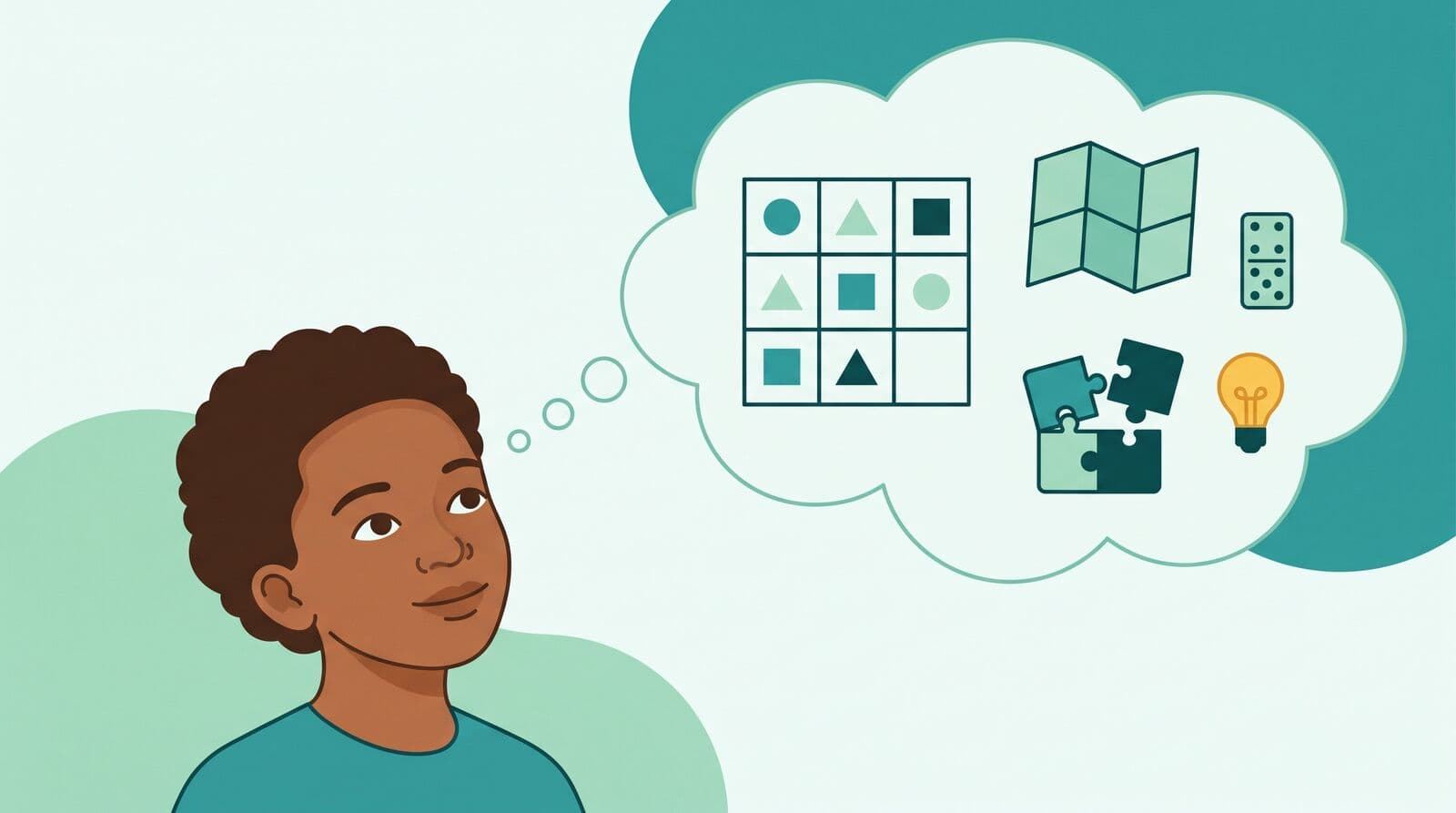
It doesn't check whether your child has learned the capital of France or their nine times table. It looks at their reasoning — the mental toolkit they use to spot patterns, solve unfamiliar problems, picture shapes in their head, and reason with words and numbers. These are the abilities that sit underneath every subject, which is exactly why schools find them so useful.
Why so many schools use it
Think about what a report card actually tells a school. It says how a child performed after a term of teaching — but it can't easily separate a child who's coasting from one who's working flat-out just to keep up. Two children can both score 65% in Maths for completely different reasons.
The CAT4 gives schools a second lens. Because it measures reasoning rather than taught content, it helps teachers spot potential that grades might hide (a bright child who's bored, or one whose home language isn't English but whose thinking is sharp), set fair and realistic targets, and notice early when a child is achieving well below what their reasoning suggests — so support can come sooner rather than after a bad set of results.
For entrance and admissions, schools like it for one honest reason: taught knowledge can be coached in a few weeks, but reasoning is harder to fake — so it's a fairer signal of a child who will thrive, not just one who was drilled.
What the CAT4 does not do (and why that matters)
This part matters as much as the rest, because it's where the anxiety usually comes from.
It is not an IQ badge — it's a snapshot of developed reasoning on one morning, not a fixed label. It is not pass-or-fail — there's no "pass mark"; it produces a profile, not a verdict. And it cannot be crammed — you can't revise reasoning the night before the way you'd revise photosynthesis. That last one is genuinely good news for a stressed household.
There's solid evidence behind it, too. Intensive last-minute coaching tends to move cognitive-test scores only slightly, and the effect fades. GL themselves discourage coaching precisely because it distorts what the test is trying to measure. So a frantic week of drilling isn't just stressful; it barely works.
So does it matter? Yes — but not in the way you fear
It matters because it informs decisions about your child — target grades, support, sometimes a place at a school. That's real, and worth taking seriously.
But "taking it seriously" doesn't mean panic. The two things that genuinely help a child on the day are reassuringly boring: familiarity, not cramming (a child who has calmly seen these kinds of puzzles before walks in relaxed instead of rattled), and reasoning built up slowly (the abilities the CAT4 looks at do grow — with time, curiosity, and the right kind of practice, over months, the way real thinking actually develops).
Where to start
If your child has a CAT4 coming up — or has just sat one and you're staring at a report full of numbers — the best first step is simply to see what the test looks like, together, with zero pressure.
At Qualificant, we build calm, playful reasoning practice for Nigerian Primary 5–6 learners, designed around how these abilities actually develop — never around cramming or fear. You can try a free taster and see the puzzle types for yourself at qualificant.co/try.
Next in this series: the four "batteries" the CAT4 is built from, and the thinking skills each one develops — so those report numbers finally make sense.
Qualificant is an independent exam-readiness platform and is not affiliated with or endorsed by GL Assessment. We don't guarantee scores or admission — we help children develop genuine reasoning and walk in calm and familiar with the format.